Breast cancer screening is not always one-size-fits-all. For many women, dense breast tissue can make screening more challenging and may call for additional Imaging beyond a standard mammogram. At Bay Radiology’s Women’s Imaging Center, ABUS Ultrasound is one of the advanced Breast Imaging tools available to support more complete evaluation when that extra detail matters.
What Is ABUS Ultrasound?
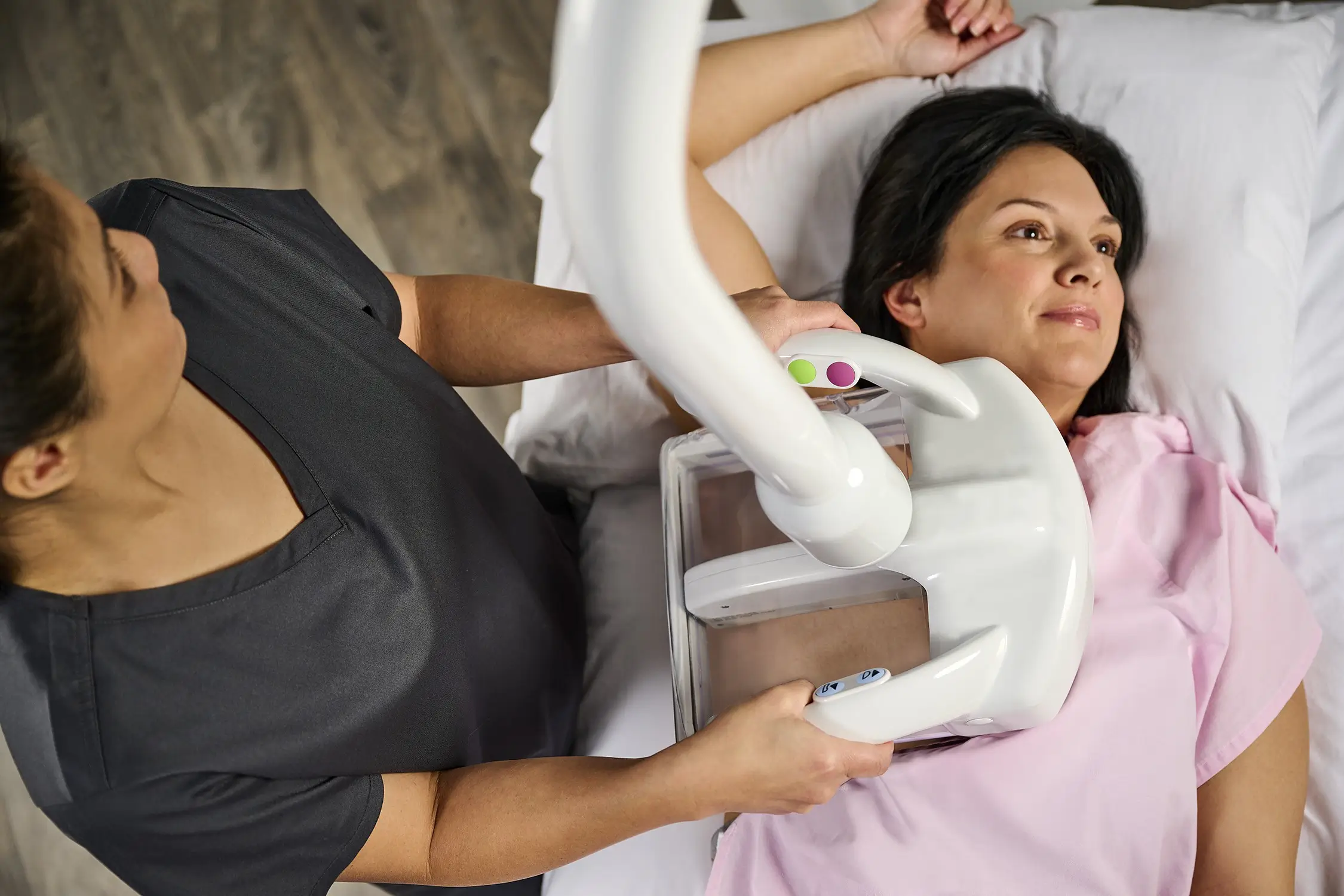
ABUS stands for Automated Breast Ultrasound, a specialized form of ultrasound Imaging designed specifically for breast screening. Unlike handheld breast ultrasound, ABUS uses an automated scanner to capture a standardized, whole-breast exam.
During the scan, a smooth scanning device moves across the breast to collect detailed ultrasound images. Those images are then reconstructed into 3D views that radiologists can review layer by layer.
ABUS Ultrasound is most often used as supplemental screening alongside mammography, particularly for patients with dense breast tissue. At Bay Radiology, ABUS exams are interpreted by Board Certified, Fellowship Trained radiologists as part of a comprehensive Breast Imaging program.
Why Dense Breast Tissue Matters
Dense breast tissue is common, but many women are never told about it until after a screening mammogram. It can make breast screening more difficult to interpret on mammography alone because both dense tissue and cancer appear white on scans.
This is why dense breast awareness has become such an important part of women’s health. Knowing you have dense tissue gives you and your provider more information to work with and opens the door to conversations about supplemental screening options.
ABUS Ultrasound is one of those options. It is one of the latest innovations designed to give radiologists another layer of Imaging when dense tissue makes standard screening more challenging.
ABUS vs. Breast Ultrasound
Two Different Ultrasound Tools for Breast Imaging
ABUS and breast ultrasound both use sound waves, but they are used differently. ABUS is an automated exam that captures images of the entire breast in a standardized way. A breast ultrasound is typically performed by hand and focuses on one specific area that needs closer evaluation.
That difference matters because ABUS is often used to add information during screening, while breast ultrasound is more often used after something has already been seen or felt.
What to Expect During an ABUS Exam
An ABUS exam is different from a mammogram and from a traditional handheld ultrasound. The exam is performed while you lie comfortably on an exam table.
A technologist will apply a layer of lotion to the breast, which helps the scanning device move smoothly and capture clear images. The ABUS scanner is then gently positioned on the breast to collect the images needed for the exam.
The device captures a series of ultrasound images as it moves across the breast in a controlled pattern. Unlike a mammogram, ABUS does not use compression, and most patients find the exam comfortable.
Each scan takes only a few minutes, and the full exam is usually completed in about 15 minutes.

Results and Next Steps
After your ABUS exam, the images are reviewed by a radiologist who specializes in Breast Imaging. When ABUS is performed alongside mammography, the radiologist reviews both sets of images together to get a more complete view of the breast.
A report is then sent to the provider who ordered your study. Your provider will discuss the results with you and explain any next steps, which may include routine screening, additional Imaging, or follow-up evaluation, depending on the findings.
Frequently Asked Questions
Is an ABUS exam painful?
Most patients find an ABUS exam comfortable. The scanner is positioned firmly against the breast to capture clear images, so you may feel some pressure, but it is very different from the compression used during a mammogram. For many women, that makes the experience feel more manageable and less stressful than they expected.
Which is better: a mammogram or ABUS?
They are not competing tests, and one is not meant to replace the other. Mammography remains the main screening tool for breast cancer, while ABUS can add important information for women with dense breast tissue. When both are used together, your radiologist has more information to work with, which can support more confident screening decisions.
What is the new law for dense breasts?
A federal dense breast notification law now requires patients to be told if they have dense breast tissue after a mammogram. That matters because many women were never told before, even though breast density can affect how clearly screening images are read. Knowing you have dense tissue gives you the chance to ask informed questions about whether supplemental Imaging may be appropriate.
Is ABUS Ultrasound covered by insurance?
Coverage can vary depending on your insurance plan and the reason the exam was ordered. Some plans do cover supplemental screening for women with dense breast tissue, while others may apply different rules. If you have questions about coverage, our team can help you understand what information to check before your appointment.
How often should I get an ABUS Ultrasound?
That depends on your personal risk factors, your breast density, and your provider’s recommendations. For some women, ABUS is used as part of an ongoing screening routine along with mammography. The right schedule is best decided with your provider based on your history and screening needs.
Does ABUS use radiation?
No. ABUS uses ultrasound technology, which relies on sound waves rather than radiation to create images. That is one reason it works well as a supplemental screening tool alongside mammography.
How long does an ABUS exam take?
An ABUS exam is usually completed in about 15 minutes. The scanner captures a series of images of the breast, and those images are then reviewed by a radiologist as part of your Breast Imaging evaluation.
Questions About Dense Breast Tissue or ABUS?
If you have been told you have dense breast tissue or want to understand whether ABUS may be right for you, our team is here to help you feel informed and supported.