Being told you need a breast biopsy usually means something on your imaging needs a closer look. That might be a change seen on a mammogram, an area found during an ultrasound, or something your provider wants to better understand.
A biopsy is how your care team gets clear answers. It allows them to determine what a finding is, rather than relying on imaging alone.
At Bay Radiology, breast biopsy procedures are performed using image guidance to accurately target the area of concern while keeping the procedure as minimally invasive as possible.
What Is a Breast Biopsy?
A breast biopsy is a procedure that removes a small sample of tissue from an area of concern in the breast so it can be examined under a microscope. This helps determine whether the finding is benign or whether it requires further evaluation or treatment
Most breast biopsies are performed using a needle rather than surgery. Imaging guidance, such as ultrasound, mammography, or MRI, is used to help the radiologist precisely locate the area and collect the sample.
Why a Breast Biopsy May Be Recommended
A breast biopsy is often the next step when a mammogram, ultrasound, or other breast Imaging exam finds an area that needs more information. That recommendation is about getting clear answers, and it does not automatically mean cancer.
A biopsy may be recommended after a finding on breast imaging, such as calcifications, a mass, or another area that looks different from the surrounding tissue. It may also be used when there is a lump or symptom that needs further evaluation, or when imaging raises a question that can only be answered by testing a tissue sample.
Types of Breast Biopsy Procedures
The type of breast biopsy recommended depends on how the area of concern is most clearly identified. Each type of biopsy is named for the imaging method used to guide it.

Ultrasound-Guided Breast Biopsy
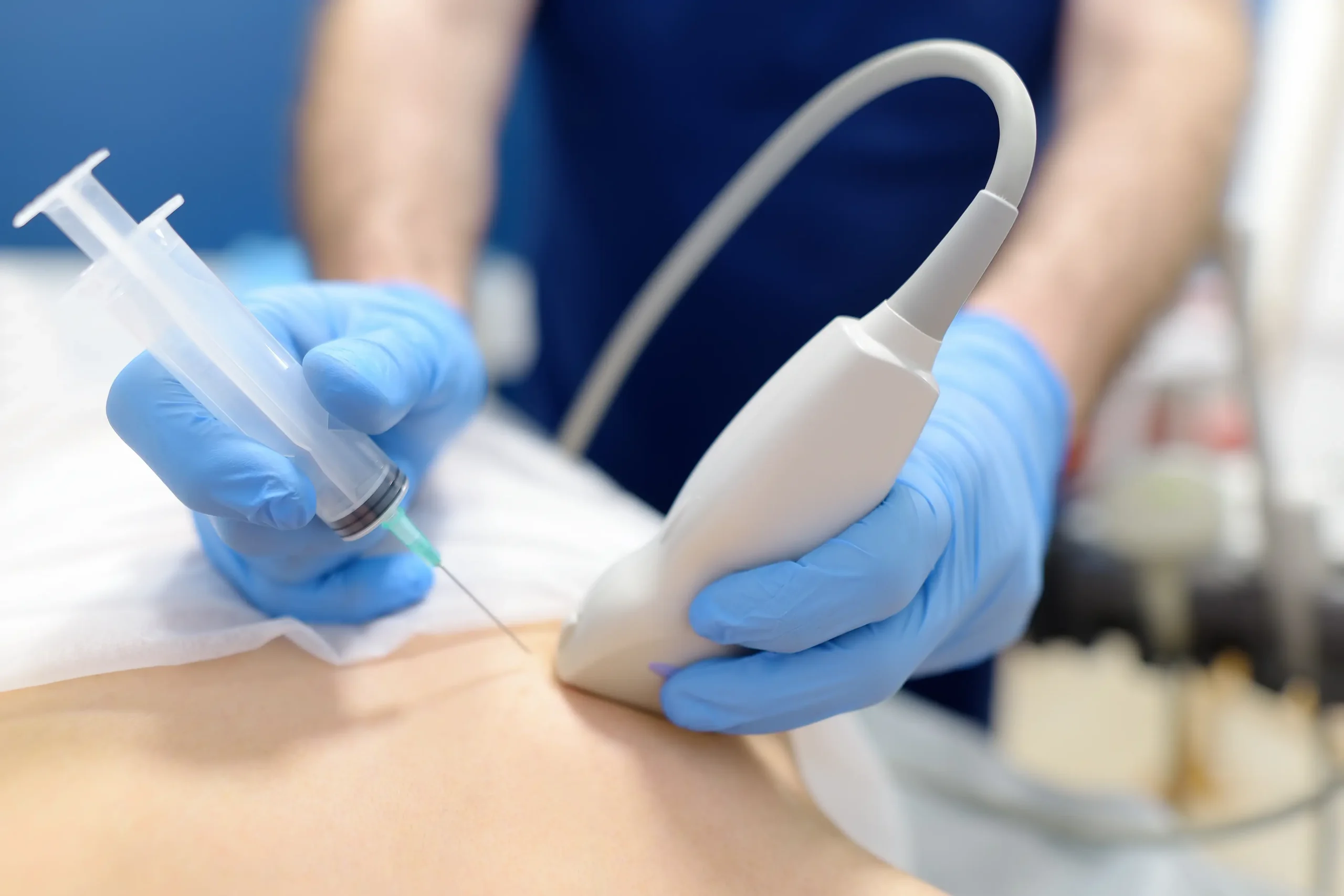
An ultrasound-guided breast biopsy is often used for breast masses or other findings that appear clearly on ultrasound. This can include solid areas that need to be sampled more closely after a mammogram, ultrasound, or physical exam.
Because ultrasound shows the area in real time during the procedure, the radiologist can watch the needle as it moves into position and collect the tissue sample from the intended spot. For many patients, this makes ultrasound-guided biopsy one of the more straightforward breast biopsy approaches.
Stereotactic Breast Biopsy
A stereotactic breast biopsy is often used for findings such as microcalcifications or subtle tissue changes that show up on mammography but do not form a clear mass on ultrasound. During this procedure, mammographic images are used to map the exact location of the area so the tissue sample can be taken from the right spot.
We also offer CEM-guided biopsy when a finding is best seen on contrast-enhanced mammography. It uses the same stereotactic method, with contrast given beforehand to help target the area.
MRI-Guided Breast Biopsy
An MRI-guided breast biopsy may be recommended for findings that are visible on MRI but do not stand out clearly on mammography or ultrasound. This can happen when MRI detects an area of enhancement that needs further evaluation.
In those situations, MRI guidance may be the best way to localize the area and obtain the tissue sample needed for diagnosis.
What to Expect: Preparation, Procedure, Recovery, and Results
Most breast biopsy procedures are performed on an outpatient basis, allowing you to go home the same day
How to Prepare
- Wear comfortable clothing, and be prepared to change into a gown if needed.
- Avoid deodorant, lotion, powder, or perfume on the day of your procedure if you are having a mammography-guided biopsy.
- Let your care team know about any medications or supplements you take, especially aspirin, blood thinners, or herbal supplements that may affect bleeding.
- Mention any allergies, recent illnesses, or medical conditions before the procedure.
- Ask ahead of time whether you should have someone drive you home, especially if sedation may be involved.
If MRI guidance is part of your procedure, your care team may give you additional instructions related to contrast, metal screening, or other MRI-specific preparation.
During the Procedure
Before the biopsy begins, the area is numbed with local anesthetic to help keep you comfortable. The radiologist uses the appropriate imaging method to locate the area and guide the biopsy. While sharp pain is not typical once the area is numb, you may feel some pressure or movement.
Recovery and Next Steps
After the tissue sample is collected, the area is bandaged, and you will receive instructions for care at home. Recovery is generally simple, and many patients can return to most normal activities soon afterward. Mild soreness, tenderness, or bruising is expected and typically resolves quickly within a few days. Contact your provider if you notice unusual swelling, continued bleeding, worsening pain, or signs of infection.
The tissue sample is sent to pathology for review, a process that usually takes a few days. Your results are typically shared by the provider who ordered your biopsy. Your provider will explain the findings and walk you through any recommended follow-up care, additional imaging, or treatment.
Frequently Asked Questions
Does a breast biopsy hurt?
Most patients are surprised by how manageable the procedure feels. The area is numbed with a local anesthetic before the biopsy begins, so you should not feel sharp pain during the procedure itself.
You may feel some pressure or movement while the sample is being taken, and it is normal to have some soreness afterward. That soreness is usually mild and temporary, and your care team will explain how to manage it.
How long does a breast biopsy take?
Most breast biopsy procedures are fairly quick. The actual sampling portion often takes only a short amount of time, but your appointment will include preparation, positioning, and post-procedure care.
In many cases, you can expect the entire visit to take about an hour, depending on the type of biopsy being performed.
How long does it take to get breast biopsy results?
After your biopsy, the tissue sample is sent to a pathology lab for evaluation. This process takes a few days in most cases.
Your results are typically shared by the provider who ordered your biopsy. If you are unsure when to expect results, it is always okay to ask your care team so you know what timeline to expect.
What happens after a breast biopsy?
After the biopsy, the area will be bandaged, and you will receive instructions for caring for the site at home. You may have some mild soreness or bruising, which is expected.
The most important next step happens behind the scenes: your tissue sample is reviewed by pathology. Once the results are available, your provider will go over them with you and explain whether any follow-up is needed.
What should I avoid before a breast biopsy?
Before your biopsy, your care team may ask you to avoid certain medications or supplements that can increase bleeding, such as aspirin or blood thinners. It is important to let them know everything you are taking, including over-the-counter medications and herbal supplements.
You may also be asked to avoid wearing deodorant, lotion, or powder on the day of the procedure, depending on the type of biopsy. Your care team will give you specific instructions ahead of your appointment.
How long does breast biopsy recovery take?
Recovery from a breast biopsy is usually straightforward for most patients. Some soreness, tenderness, or bruising can last for a few days, but it typically improves quickly.
Most people are able to get back to their usual routine soon after the procedure, with only minor adjustments based on the instructions provided by their care team.
Will I have a scar after a breast biopsy?
Most breast biopsies are performed with a needle rather than surgery, which means scarring is typically minimal. In many cases, any mark left behind is small and fades over time.
Your care team can explain what to expect based on the type of biopsy you are having.