Bone loss can happen quietly over time. A lot of people don’t realize their bones have gotten weaker until they have a fracture from a minor fall or something that wouldn’t have been a big deal before.
Also called a bone density test or Bone Densitometry, a DEXA scan helps measure bone strength before that happens. It gives your provider a clearer picture of your bone health and helps guide decisions about prevention, treatment, or simply keeping an eye on changes over time.
At Bay Radiology, DEXA scans are part of our outpatient Imaging services in Panama City, with results interpreted by Board Certified, Fellowship Trained radiologists.
What a DEXA Scan Measures
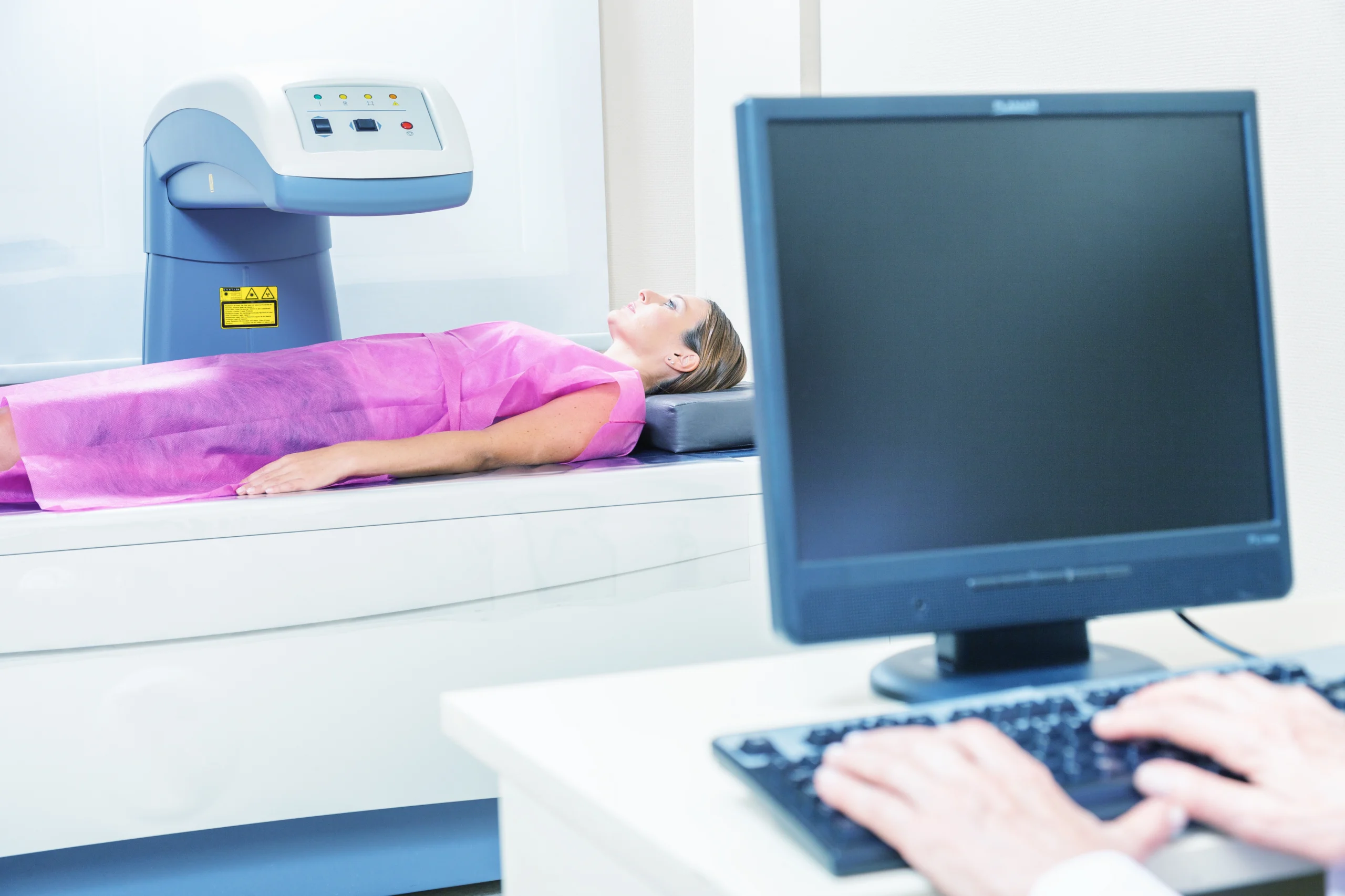
A DEXA scan measures bone mineral density (BMD), which is one of the best ways to understand how strong your bones are. The scan is usually done on the hip and lower spine since those areas are closely tied to fracture risk as we age.
Results can be used to establish a baseline, check for osteoporosis or low bone mass, and track changes over time if your provider wants to monitor bone health.
Why Bone Density Testing Matters
Bone density testing puts real numbers behind bone health. It provides a baseline and can help your provider answer questions like:
- Are your bones losing density faster than expected for your age?
- Is your fracture risk higher than it should be?
- Would lifestyle changes, supplements, or medication make sense for you right now?
- If you’re already on treatment, is it helping?
This test is often recommended for osteoporosis screening, especially for adults over 50 and postmenopausal women, or for anyone with risk factors like a family history of osteoporosis, prior fractures, low body weight, smoking, or long-term steroid use. Your provider uses the results along with your health history to decide what the next step should be, whether that’s prevention, monitoring, or treatment.
Understanding Your Results
Your DEXA scan results are typically reported using a T-score. A T-score is a number that shows how your bone density compares to the average bone density of a healthy young adult.
Think of it as a measure of “how far above or below average” your bone density is. The more negative the number, the lower the bone density compared to that reference group. Your report may also include a Z-score, which compares your bone density to others in your age group, but the T-score is the one most often used when screening for osteoporosis.
In general, T-scores fall into three categories:
- Normal bone density
- Low bone mass (sometimes called osteopenia)
- Osteoporosis
Your provider will interpret your results in context, including your age, health history, and any other risk factors. In many cases, what matters most is the bigger picture: where your bone density is today and whether it’s changing over time.
What to Expect During Your DEXA Scan
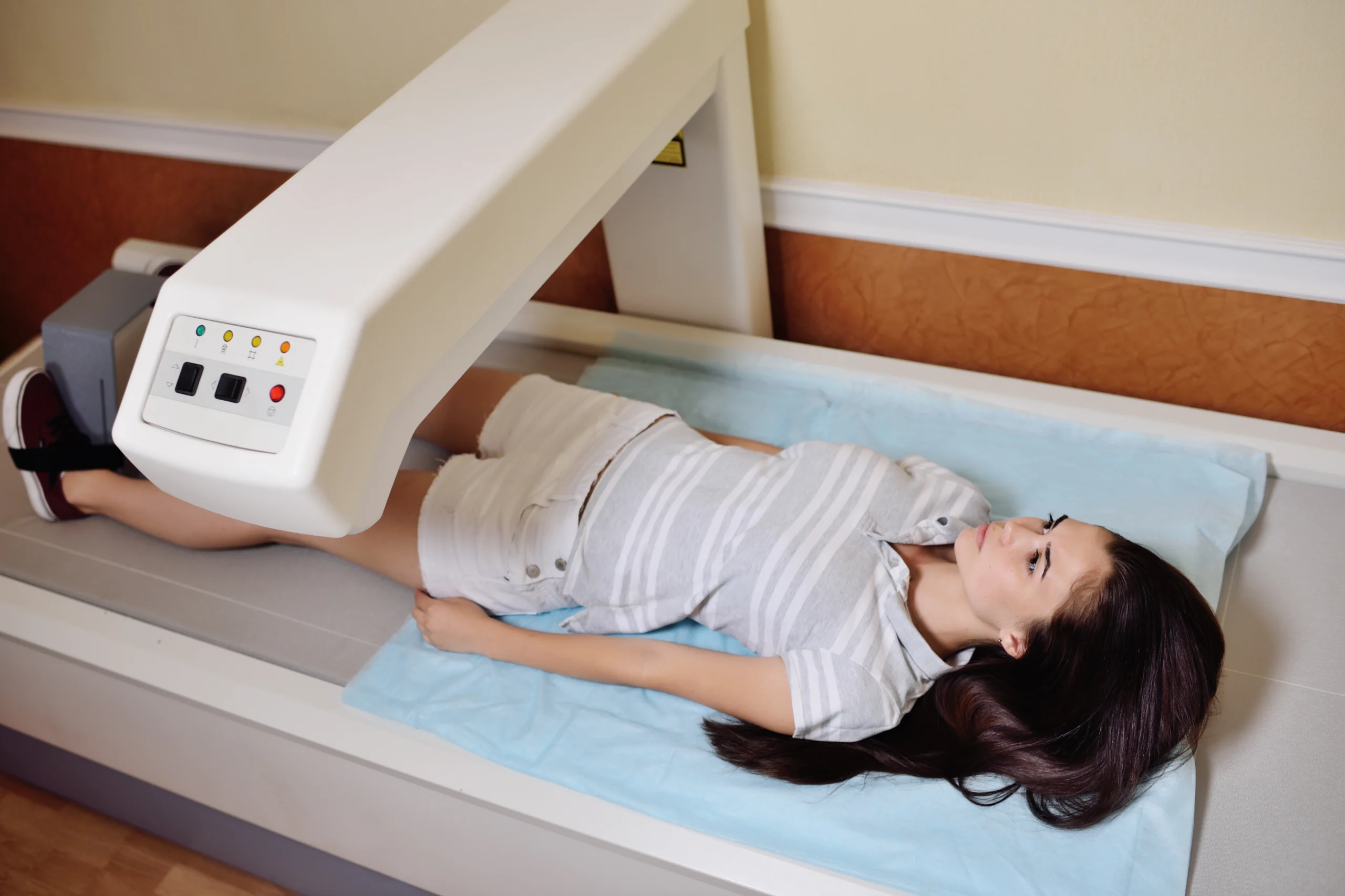
A DEXA scan is a quick, low-stress exam. You’ll lie on a padded table while the scanner passes over the areas being measured, most often the hip and lower spine. The machine is open and does not enclose your body.
You won’t feel the scan itself, but you may be asked to stay still for short moments so the images are accurate. Most appointments are finished in a short visit, and you can go right back to your day afterward.
How to Prepare
A few details are worth keeping in mind before your appointment:
- Skip calcium supplements for 24 hours beforehand, unless your provider tells you otherwise.
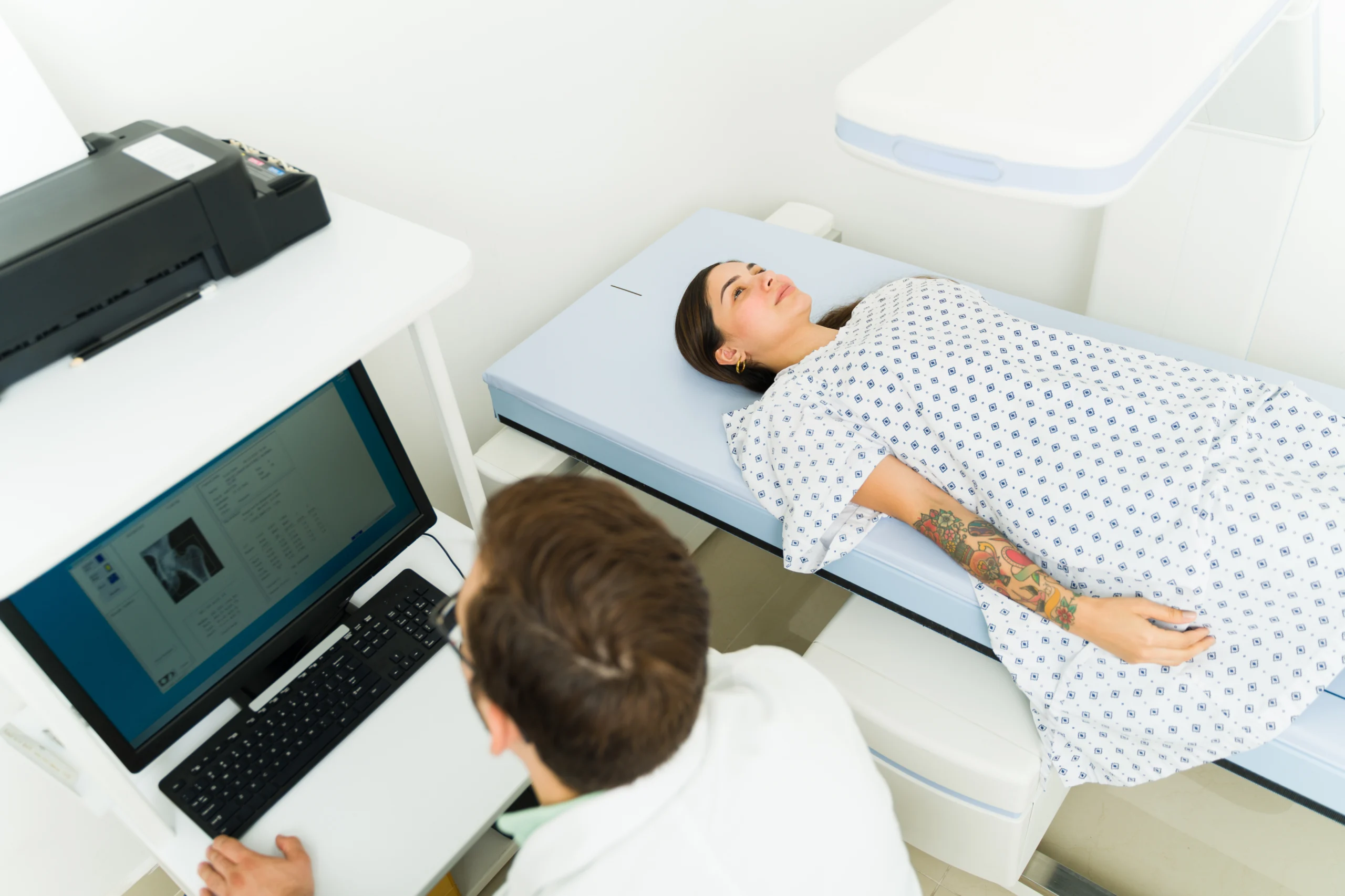
- Wear comfortable clothing without metal near the waist or hips, like zippers, belts, or metal buttons. You may be asked to change into a gown.
- Let your provider know if you recently had a barium study or an imaging exam that used contrast. In some cases, you may need to wait before bone density testing.
- Tell the Imaging team if you are pregnant or think you might be pregnant before the exam
Results and Next Steps
After your exam, your images are reviewed at Bay Radiology by Board Certified, Fellowship Trained radiologists. A report is then sent to the provider who ordered your test.
From there, your provider will talk with you about what the results mean for you and whether any next steps are recommended. In some cases, that may mean continuing routine monitoring. In other cases, your provider may discuss prevention steps or treatment options based on your overall risk factors and health history.
Frequently Asked Questions
How long does a DEXA scan take?
Most people are in and out pretty quickly. The scan portion is short, but your appointment time can vary depending on check-in and how long it takes to get positioned comfortably on the table. If you’re trying to plan your day, it’s reasonable to expect a brief visit rather than a long appointment.
When will I get my DEXA scan results?
A bone density test doesn’t usually come with same-day results like some labs. Your report is sent to the provider who ordered it, and they’ll share the results with you and explain what they mean. If timing matters for an upcoming visit or treatment decision, it’s a good idea to ask your provider’s office when they typically review results.
What is a T-score, and what does it mean?
A T-score is the number on your report that helps your provider understand where your bone density falls compared to a healthy young adult reference group. It’s reported as a number (often negative), and the farther below zero it is, the lower your bone density compared to that reference point.
What most people actually want to know is: “What does this mean for me?” Your provider will combine the T-score with your risk factors, age, and history to decide whether the right next step is prevention, monitoring, or treatment.
How accurate are DEXA scans?
DEXA is widely used because it’s consistent and repeatable, which makes it useful for tracking changes over time. Like any measurement, accuracy is best when the scan is done the same way each time and compared in context.
If you’ve had prior spine or hip surgery, significant arthritis, or other changes in the measurement area, your provider may take that into account when interpreting the report. That’s one reason the “interpretation” matters as much as the number itself.
At what age should a woman get a bone density test?
There isn’t one perfect age for everyone, but many women start screening around menopause or later, especially if there are risk factors. If you’ve had a fracture as an adult, take certain medications (like long-term steroids), or have other risk factors, testing may make sense earlier.
If you’re not sure whether it’s time, this is a great question to ask your provider. They can help decide whether you need a baseline now or whether it can wait.
How often should you get a bone density test?
The schedule depends on what your results show and whether your provider is monitoring a known issue or treatment. Some people only need occasional repeat testing, while others may be checked more frequently if bone density is low or if treatment has started.
The best approach is to follow the timeline your provider recommends based on your specific risk factors and goals, not a one-size-fits-all schedule.
Does Medicare cover a bone density test?
In many cases, yes. Medicare often covers bone density testing for osteoporosis screening and monitoring, but coverage can depend on your medical history and how recently you’ve had the test.
If you’re using Medicare and you’re unsure what applies to you, it’s worth confirming coverage ahead of time so there are no surprises.
Questions About Bone Density Testing?
If you have questions about an order, scheduling, or what to expect, the Bay Radiology team is here to help.